Benefits of Heras Fence Covers for Construction Site Security
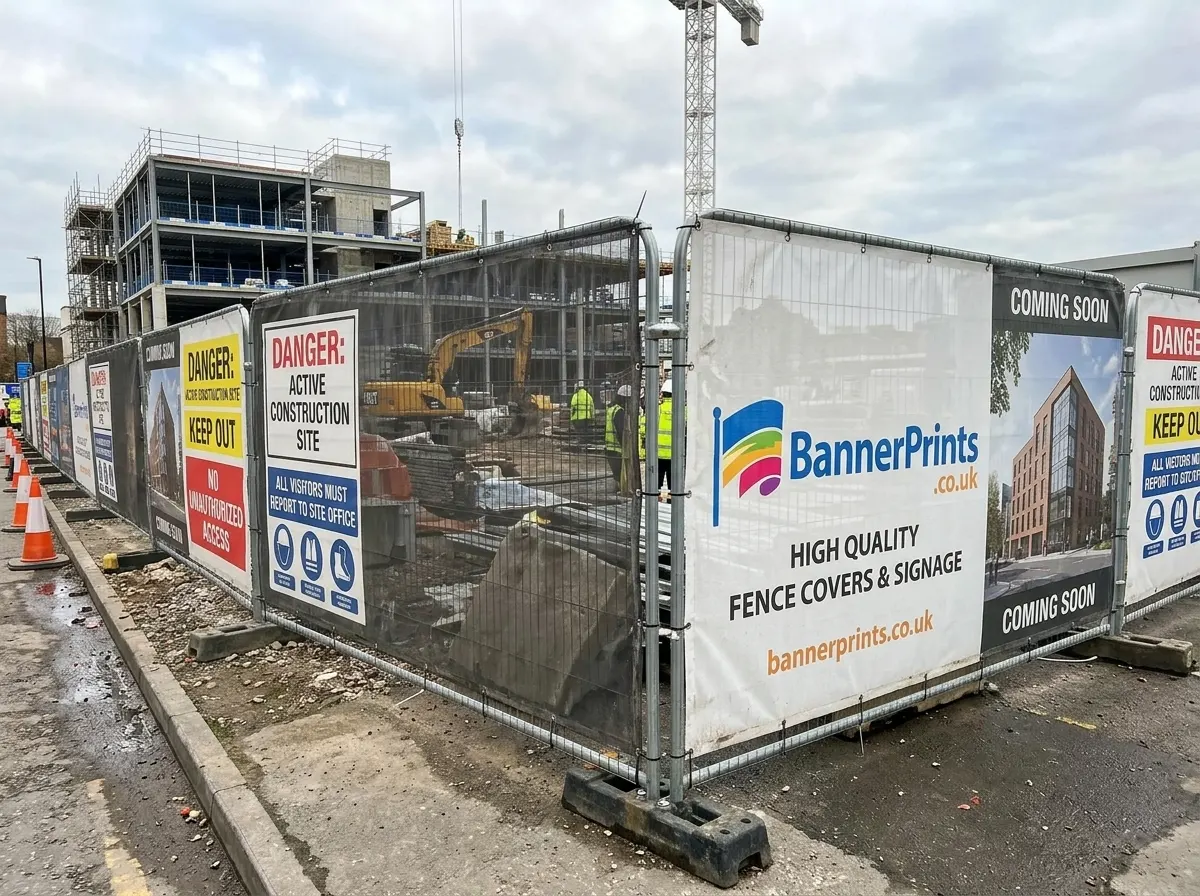
Heras fencing is the standard temporary perimeter solution on construction sites across the UK. You see it everywhere: housing developments, commercial builds, road works, demolition projects, and utility installations. But on its own, bare heras fencing does very little beyond marking a boundary. It is see-through, easy to climb, and does nothing to control dust, debris, or how your site looks to the public.
That is where heras fence covers come in. Adding printed or plain covers to your heras panels transforms basic temporary fencing into a functional security, safety, and branding system. This guide covers every benefit of using Heras fence covers on your construction site, from theft reduction and privacy to dust control and professional branding.
What Are Heras Fence Covers?
Heras fence covers are large printed or unprinted panels that attach to the front of standard Heras fencing. They are made from durable materials such as PVC mesh, airmesh, or heavy-duty fabric, and they are secured to the fence panels using cable ties, bungee cords, or eyelet fixings.
Standard Heras fence panels measure 3.5 metres wide by 2 metres tall, and covers are produced to match these dimensions. Custom sizes are also available for non-standard fencing or partial coverage.
Security Benefits
Visual Deterrent Against Intruders
An open Heras fence lets anyone walking past see exactly what is on site: tools, materials, machinery, and the layout of the site itself. This is an invitation to opportunistic thieves. A covered fence blocks the line of sight completely, removing the ability to scope out valuable items from the outside.
The psychological effect is significant. A site that looks enclosed, monitored, and professionally managed is far less attractive to intruders than one where everything is visible through bare mesh fencing. Heras covers signal that the site is actively managed and that security has been considered, which alone deters a large percentage of would-be trespassers.
Anti-Climb Properties
Bare heras fencing is notoriously easy to climb. The open mesh provides convenient hand and footholds, and the panels flex under weight without offering much resistance. Adding a cover changes this significantly.
A taut cover removes handholds and footholds by covering the mesh. It also adds weight and tension to the panel, making it harder to pull or push out of alignment. While no temporary fence is completely climb-proof, a covered panel is less easy to scale than a bare one, especially for opportunistic intruders rather than determined ones.
Reducing Theft and Vandalism
Construction site theft costs the UK industry an estimated 800 million pounds per year, according to the Chartered Institute of Building. Tools, copper wiring, diesel, plant equipment, and building materials are all targets. Heras fence covers reduce theft by eliminating the ability to see what is worth stealing.
Vandalism is also reduced. Graffiti, damage to machinery, and interference with site infrastructure are all less likely when the site is enclosed and appears well managed. The combination of visual screening, anti-climb properties, and a professional appearance creates a layered security effect that makes your site a harder target.
Controlled Access Points
When heras panels are covered, the natural entry and exit points become clearly defined. Anyone approaching the site is channelled toward the designated gates and access points rather than being able to enter at any gap in the fence line. This makes it easier for site security and management to monitor who enters and leaves, and it reduces the chance of unauthorised access going unnoticed.
Privacy and Safety Benefits
Increased On-Site Privacy
Many construction projects require privacy during certain phases of work. Demolition, ground works, and structural alterations can look alarming to members of the public who do not understand what is happening. Covered fencing prevents unnecessary attention, complaints, and interference from passers-by.
Privacy is also important for client confidentiality. Retail fit-outs, commercial refurbishments, and residential developments often need to keep the work hidden until the grand reveal. Heras covers give you that privacy without the cost of permanent hoarding.
Dust and Debris Containment
Construction work generates significant amounts of dust, particularly during demolition, excavation, concrete cutting, and material handling. Airborne dust is a health hazard for site workers and neighbouring residents, and it is a common source of complaints and enforcement action.
Heras fence covers act as a dust barrier, reducing the amount of particulate matter that escapes the site perimeter. While they do not replace dedicated dust suppression measures on high-risk sites, they provide an additional layer of containment that helps you meet your obligations under the Control of Substances Hazardous to Health (COSHH) regulations and local planning conditions.
Debris containment is another practical benefit. Lightweight materials, packaging, and waste that might otherwise blow off site are caught by the fence covers, keeping the surrounding area clean and reducing the risk of complaints from neighbours and the local council.
Wind and Weather Screening
On exposed sites, heras covers provide a degree of wind screening for workers and materials. While mesh covers allow wind to pass through (which is their key structural advantage), they still reduce wind speed at ground level, making working conditions more comfortable and reducing the risk of lightweight materials being blown around the site.
For sites adjacent to roads and public footpaths, this screening effect also reduces the chance of debris reaching pedestrians and vehicles, which is both a safety and a liability concern.
Compliance and Planning Benefits
Meeting Planning Conditions
Many local planning authorities in the UK include conditions relating to site appearance, dust control, and neighbour amenity as part of planning permissions for construction projects. Heras fence covers help you demonstrate compliance with these conditions by providing visual screening, dust containment, and a professional site boundary.
On larger projects, particularly those in residential areas, town centres, or near schools and hospitals, planners may specifically require hoarding or screening as a condition of consent. Heras covers offer a cost-effective way to meet this requirement without the expense of constructing solid timber hoarding.
HSE and CDM Compliance Support
The Construction (Design and Management) Regulations 2015 require that construction sites are secured to prevent unauthorised access. While the regulations do not specify the type of fencing required, demonstrating that you have taken reasonable steps to secure the site perimeter is essential. Covered Heras fencing strengthens your position by showing that you have gone beyond basic fencing to provide a more effective barrier.
From an HSE perspective, dust control measures and debris containment also support your site safety management plan and reduce the risk of enforcement notices.
Branding and Communication Benefits
Professional Site Appearance
First impressions matter, especially in residential developments and commercial projects where potential buyers, tenants, and investors may visit the area during construction. A row of bare heras panels with cable ties and warning signs looks temporary and low-budget. Covered heras panels with clean, professional graphics transform the site boundary into a positive brand statement.
Developers, main contractors, and property companies increasingly recognise that site appearance affects public perception and can influence sales and lettings even before the project is complete.
Custom Printed Branding
Printed heras covers turn your site perimeter into a large-format advertising opportunity. You can display your company logo, project branding, CGI images of the completed development, contact details, sales office information, and marketing messages across hundreds of metres of fencing.
For residential developers, printed heras covers showing CGI renders of the finished homes, prices, and sales contact details generate enquiries from day one of the construction phase. For commercial projects, they communicate professionalism and progress to stakeholders, investors, and the local community.
Wayfinding and Public Information
On large or complex sites, printed heras covers can serve a practical wayfinding function. Directional signage, pedestrian diversion routes, delivery entrance locations, and site contact information can all be printed directly onto the covers. This reduces confusion for deliveries, visitors, and members of the public, and it demonstrates good site management to the local community and planning authority.
Heras Cover Materials Compared
The material you choose affects durability, wind performance, and print quality. Here are the main options:
PVC Mesh
The most popular choice for construction sites. PVC mesh has thousands of small perforations that allow wind to pass through, reducing wind loading on the fence panels. It is waterproof, UV-resistant, and produces a clear, readable print. PVC mesh is the best all-round option for most UK construction sites.
Airmesh PVC
A lighter-weight mesh material with larger perforations than standard PVC mesh. Airmesh allows more airflow, which is an advantage on very exposed or windy sites. Print quality is slightly lower than standard mesh at close range but is perfectly readable at normal viewing distances.
Heavy-Duty Fabric
A solid, non-perforated material that provides complete visual screening and superior print quality. Heavy-duty fabric is the best choice for sites where privacy and print quality are the top priorities, but it creates higher wind loading on the fence panels, so it is less suitable for very exposed locations.
Standard PVC Vinyl
Solid 440gsm PVC can also be used as heras covers. It provides complete screening and excellent print quality but, like heavy-duty fabric, it creates significant wind loading. PVC vinyl heras covers work well on sheltered sites and for short-term use.
How to Choose the Right Heras Cover
Consider these factors when selecting your heras fence covers:
- Wind exposure: For exposed sites, choose PVC mesh or airmesh for their wind-permeable properties. For sheltered sites, heavy-duty fabric or PVC vinyl gives better privacy and print quality.
- Duration: For long-term projects lasting months or years, invest in UV-resistant PVC mesh or heavy-duty fabric. For short events or temporary works, standard PVC vinyl offers good value.
- Purpose: If the primary goal is security and privacy, any material works. If branding and print quality are priorities, heavy-duty fabric or standard PVC mesh deliver the best results.
- Budget: PVC mesh offers the best balance of cost, durability, and performance for most construction applications. Heavy-duty fabric costs more but delivers premium print quality.
Installation Tips
Getting the installation right ensures your heras covers last and look professional throughout the project:
- Use cable ties or bungee cords at regular intervals along the top, bottom, and sides of each panel. Space fixings every 300mm to 400mm for a secure, taut finish.
- Ensure covers are pulled taut across the panel to prevent sagging and flapping, which accelerates wear and looks untidy.
- Overlap adjacent covers by 50mm to 100mm to prevent gaps appearing between panels when the fence line shifts.
- Check fixings regularly, especially after storms or high winds. Replace any broken cable ties or bungee cords promptly.
- On long fence runs, install covers in sequence from one end to the other to maintain alignment and prevent mismatched graphics.