Pop Up Banner vs Roller Banner: Sizes, Stands and Key Differences
You have booked an exhibition stand. Now you need something to put on it. Search for a display, and you will hit two names immediately: the roller banner and the pop-up banner. They sound similar, they are often shown side by side, and it is not obvious which one you actually need.
The difference is bigger than it looks. One is a single freestanding graphic that sets up in seconds. The other is a full-width branded wall that becomes the backdrop of your entire stand. Order the wrong one, and you either have a tiny display lost in a large hall, or a full exhibition wall you did not need for a reception desk.
This guide covers the real differences in sizes, stands, setup, cost and use cases so you order the right display for your space the first time.
Pop Up Banner vs Roller Banner: What Is the Difference?
A roller banner is a single freestanding graphic, usually 850mm wide and 2m tall, that pulls up from a base cassette and sets up in under a minute. A pop-up banner is a full-width curved or straight wall, usually 2.2m to 4m wide, that forms the backdrop of an exhibition stand and takes around ten minutes to assemble. Choose a roller banner for a single message in a compact space, and a pop-up banner for a full branded stand backdrop.
Both are portable, both use a replaceable printed graphic, and both are staples of UK exhibitions and events. But they solve different problems. The roller banner is about a single focused message. The pop-up banner is about creating a branded environment.
What Is a Roller Banner?
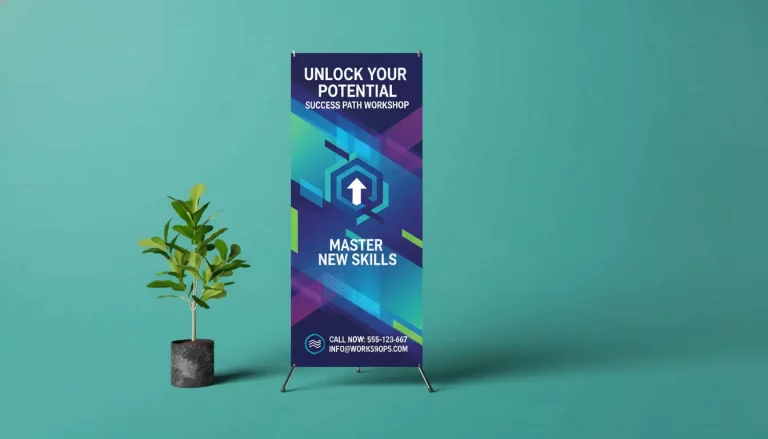
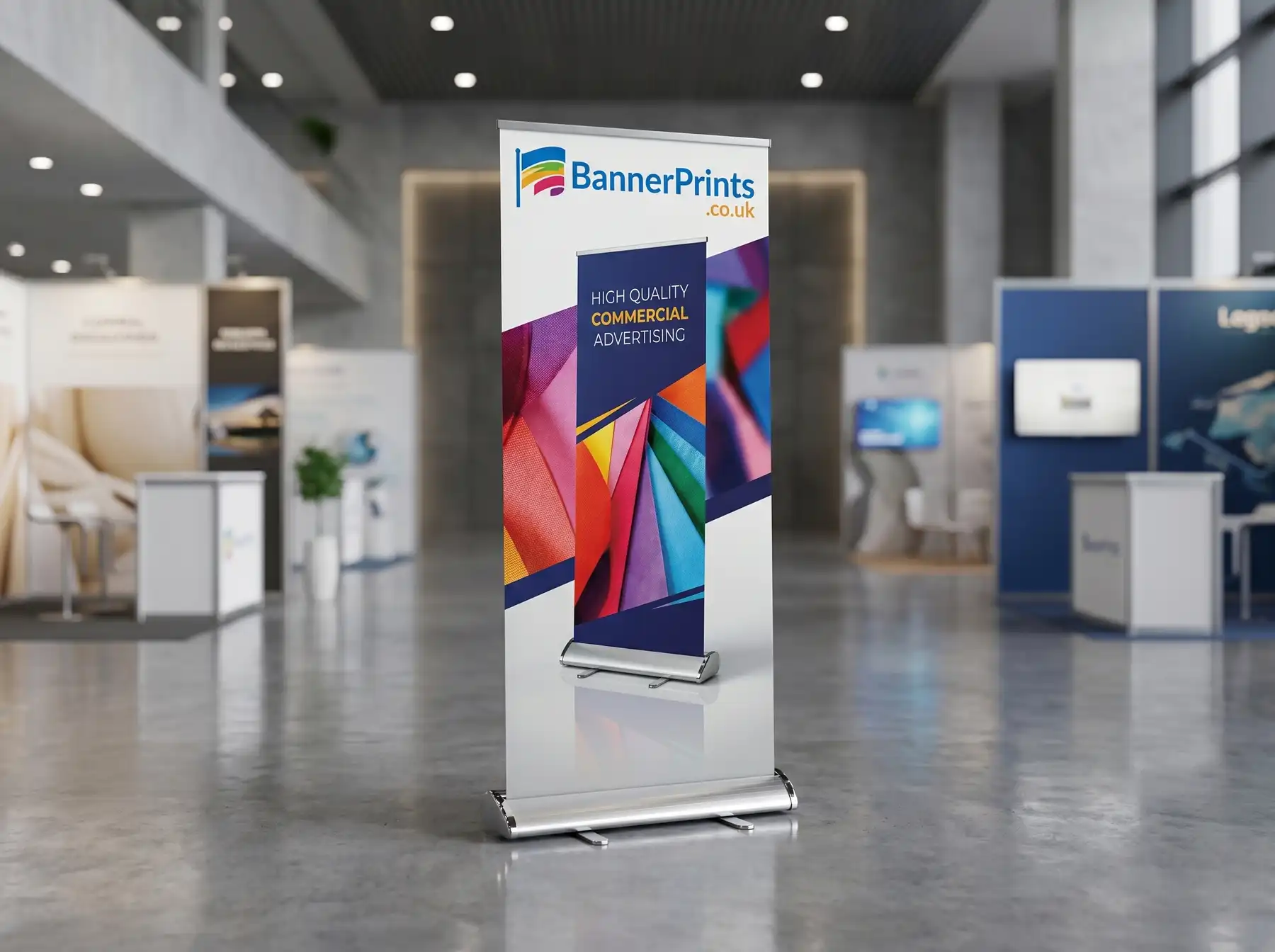
A roller banner, also called a pull-up banner or roll-up banner, is a single printed graphic that rolls into a base cassette and pulls up to a support pole. The whole unit packs into a carry bag and sets up in under a minute without any tools. It is the most popular portable display in the UK for a reason: it is quick, compact and cost-effective.
Standard Roller Banner Sizes
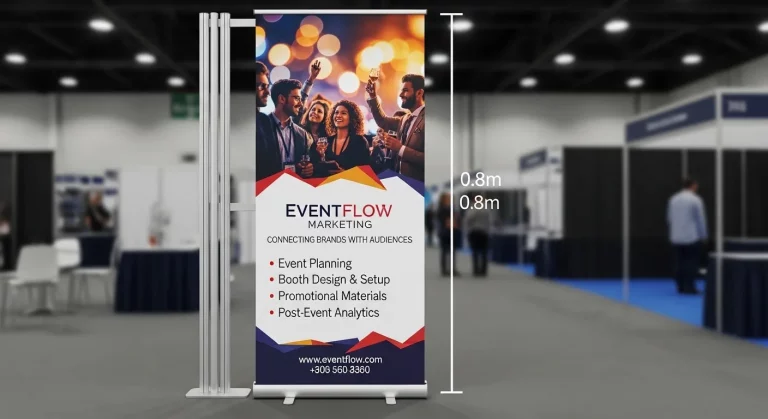
The standard UK roller banner is 850mm wide by 2000mm tall. This is the default size you will see at conferences, receptions and retail spaces across the country. Compact 800mm versions suit tighter spaces, and wider 1000mm and 1200mm versions give more graphic area for detailed messaging.
When to Use a Roller Banner
• Conference and seminar rooms where a single message needs to be seen
• Reception and office areas promoting a service or campaign
• Retail promotions, product launches and trade counters
• Small exhibition stands where space is limited
• Directional and wayfinding signage at events
The roller banner’s biggest strength is convenience. One person can carry it, set it up and pack it away. For businesses attending regular events, it is a reliable and low-cost display.
What Is a Pop Up Banner?
A pop-up banner is a full-width display wall built on a magnetic expanding frame. The frame pops open from a wheeled carry case, graphic panels attach magnetically, and the result is a seamless branded backdrop that spans the width of your stand. Where a roller banner is a single sign, a pop-up banner is an entire wall.
Standard Pop Up Banner Sizes
Pop up banners are sized to fit standard exhibition stand plots. The most common is the 3×3 (approximately 2.2m wide), designed to fill the back wall of a standard 3-metre exhibition stand. Larger 3×4 (3m wide) and double-width 4m+ versions cover bigger plots. Both curved and straight frame configurations are available.
When to Use a Pop Up Banner
• Exhibition stand backdrops where you need a full branded wall
• Trade shows where your stand needs presence from across the hall
• Press and media backdrops for photography and video
• Product launches and branded event environments
• Any setup where a single roller banner would look lost in the space
The pop-up banner’s strength is impact. It creates a branded environment rather than adding a single freestanding sign. For a serious exhibition presence, it is the backbone of the stand.
Pop Up Banner vs Roller Banner: Full Comparison
Here is the complete comparison across every factor that matters when choosing between the two:
| Factor | Roller Banner | Pop Up Banner |
| Display type | Single freestanding graphic | Full-width curved or straight wall |
| Standard width | 800mm to 1200mm | Approx 2.2m to 4m+ |
| Standard height | 2000mm (2m) | 2200mm to 2300mm |
| Setup time | Under 60 seconds | Around 10 minutes |
| Best for | Single message, tight spaces | Full stand backdrop, branding |
| Portability | Very compact one hand | Larger wheeled case |
| Cost | Lower | Higher |
| Replaceable graphic | Yes | Yes |
What Sizes Do Roller Banners and Pop Up Banners Come In?
Sizing is where the two products differ most clearly. A roller banner is measured as a single panel. A pop-up banner is measured by the exhibition plot it needs to fill. Here are the standard sizes for both:
| Product | Common Size | Typical Use |
| Roller banner (standard) | 850 x 2000mm | The default UK roller banner conferences, receptions, retail |
| Roller banner (compact) | 800 x 2000mm | Tight spaces and narrow stand areas |
| Roller banner (wide) | 1000 to 1200mm wide | More graphic space for detailed messaging |
| Pop-up banner (3×3) | 2.2m wide curved/straight | Standard 3m exhibition stand backdrop |
| Pop up banner (3×4) | 3m wide | Larger exhibition plot backdrop |
| Pop up banner (double) | 4m+ wide | Full-width premium exhibition wall |
For roller banners, the 850 x 2000mm size covers the vast majority of UK use cases. For pop-up banners, match the size to your booked stand plot a 3×3 pop-up fills a standard 3-metre stand back wall, and larger plots need the wider versions.
Which Is Easier to Set Up and Transport?
The roller banner wins decisively on speed and portability. It sets up in under a minute, weighs a few kilograms, and one person can carry it in one hand in its bag. If you are travelling to an event alone, or moving between multiple locations in a day, the roller banner is built for it.
The pop-up banner takes around ten minutes to assemble. The magnetic frame expands from a wheeled case, graphic panels attach one by one, and while it is not difficult, it is easier with two people for the larger sizes. This is not a weakness it reflects the fact that you are building a full wall rather than pulling up a single graphic. For a planned exhibition where impact matters more than speed, the extra ten minutes is well spent.
The simple rule: roller banner for speed and solo setup, pop-up banner for planned stands where presence matters.
Which Should You Choose for Your Event?
The right choice comes down to your space and your goal. Here is the straightforward answer by event type:
Choose a Roller Banner If
• You are attending a conference, seminar or networking event
• Your stand or space is small and a full wall would be too much
• You need to set up quickly and travel light
• You want several displays with different messages at a lower cost
• The display is for a reception, retail counter or office
Choose a Pop-Up Banner If
• You have booked a 3-metre or larger exhibition stand
• You want a full branded backdrop with presence across the hall
• You need a clean background for press, photography or video
• You exhibit regularly and want a reusable core stand display
• A single roller banner would look lost in your space
Or Use Both Together
The strongest exhibition setups often use both. The pop-up banner forms the main branded backdrop, and roller banners sit at the edges of the stand carrying specific messages a product, an offer, a service list or a QR code. The pop-up gives the stand its identity, and the roller banners let you change campaign messaging from one event to the next without reprinting the whole wall.
FAQs
Conclusion
Banner Prints UK supplies roller banner stands, roll up banner stands, pop up display stands and X banner stands from our Manchester facility. Every stand comes complete with the printed graphic, the hardware and a carry case. Free artwork check on every order and free UK delivery on orders over £100.
Not sure which display suits your stand or event? Call us before you order, and we will recommend the right setup for your space and budget, with no obligation.