Lightweight vs Heavy Duty Banner Materials Explained: Complete Guide

The difference between lightweight vs heavy duty banner materials, including durability, cost, and best uses for indoor and outdoor displays.
At Bannerprints.co.uk, we are aware that the choice of banner material has a significant influence in the performance of your signage. The amount of weight, the thickness, and the construction of a banner is what defines its longevity of a few days of indoor usage or weeks of outdoor use.
A lot of banner issues, such as tearing, fading, hanging, and flapping, are reduced to a decision to use a material that is not suitable to the environment. In this guide, we bring out a clear explanation of the lightweight and heavy-duty banner materials so that you can be able to select the right one with confidence.
Why Banner Material weight is important
The banner weight influences the durability, handling and performance. Lightweight materials are light and hence transportable and easily installed as compared to other materials, making them attractive in the temporary usage. However, heavy duty materials are meant to be able to withstand tension, weather conditions and long exposure with no failure.
As we have seen the most costly banner is the one that needs to be changed too fast. Knowledge of banner weight prevents needless reprints as well as delivers value of your signage within the expected duration of service.
Lightweight Banner Materials Explained
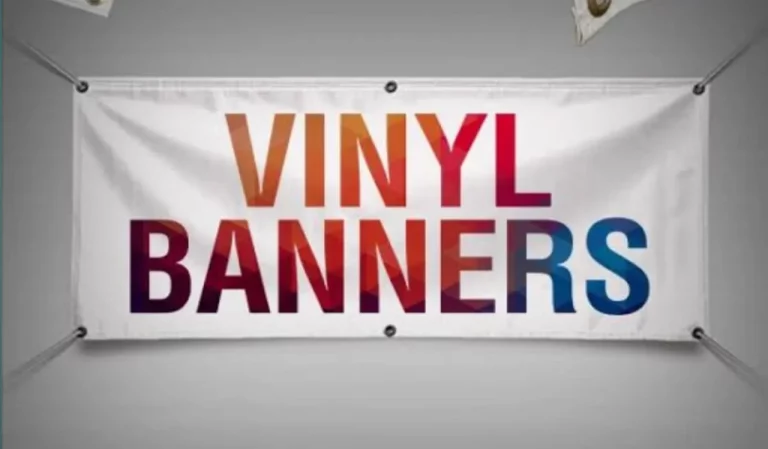
Lightweight banners are normally made of lower GSM of vinyl or polyester, including 10oz of vinyl or lightweight fabric. These banners are portable, cost-effective and flexible hence can be used in short term indoor use.

Lightweight banners roll easily since they are thinner, and it is also cheaper to ship them. Nevertheless, the same feature makes them more likely to buckle, crease, or tear in case they are subjected to wind or frequent use in the open air.
Best Uses for Lightweight Banners
Banners that are light are most effective in controlled conditions where the weather does not pose a factor. They are mostly applicable in indoor trade show, exhibitions, retail displays and short promotional campaigns.
They can also be an intelligent alternative whenever there are seasonal sales or events during which the banner will not be up long. Lightweight banners are a great investment when the display time is limited, and the conditions are favorable, and there is no need to spend money on the material.
Limitations of Lightweight Banners
On the one hand, lightweight banners are cheap and not durable. During their outdoor play, they are able to flap furiously during the wind, they fade quicker in sunlight and they can shred at actors of repair.
In indoors, they can be reduced in life by frequently being handled. In case of any banner that is likely to be held over a long duration, lightweight materials could be disappointing and costly in the long run.
Heavy-Duty Banner Materials Explained
Banners that are heavier and used are made of more thick vinyl or reinforced polyester, usually in weights of 13oz or 15oz vinyl. These are materials that are designed to resist tension, weather and durability outdoors.
This new layer provides heavy banners with a more solid touch and less vulnerability to tearing. They maintain their shape more, do not fade under UV and work in harsh conditions.
Best Uses for Heavy-Duty Banners
The dense banners are best suited to storefront displays, building sites, outdoor advertising and building wraps. They are built to last long and not to lose their quality and stability.
These banners also have more uses in double sided printing, since the heavy material will minimize light bleed. Heavy-duty materials are the safest one when longevity and power must be considered.
Drawbacks of Heavy-Duty Banner Materials
The main disadvantage of the heavy-duty banners is the fact that they are more expensive initially. Increased thickness makes it more expensive to manufacture and required to carry and transport.
However, in a long-term view, they are usually compensated by their durability. The heavy-duty banners often prove economical in the long term as fewer replacements and less maintenance will ensure.
Specialty Banner Materials for Specific Needs
- Mesh banner – these are constructed with holes to enable air to pass through them hence suited in outdoor areas where there is a lot of wind i.e. fencing, scaffolding and event barriers.
- Polyester or fabric banners – Have a smooth, upmarket look when used in an indoor setting such as trade show or exhibition but they need protection when used outdoors.
- Polypropylene banners – Light, reusable and can be used on short-term or seasonal signs where it is important to be sustainable.
These specialty materials are present to address certain problems. The wise selection of them can significantly enhance performance in the niche situations.
Key Factors to Consider When Choosing Banner Material
- Weight and thickness – The greater the GSM rating or ounce rating, the stronger and tougher the material can be used outdoors.
- Finish and weave – Thinner materials have a deeper print, whereas the heavier threads are stronger and damage resistant.
The combination of these factors would mean that you have a good looking banner along with one that works in the environment in which it is to be utilized.
Lightweight vs Heavy-Duty: Making the Right Choice
Lightweight banners are most favored in short-term and indoor exhibits where the aspect of being handled easily and at low cost is of priority. They are useful in cases whereby there is minimal exposure to wind, rain, and sunlight.
Outdoor use, long-term installation, as well high-traffic areas should be equipped with heavy-duty banners. When the banner has to endure weather and have a professional look after some time, then heavier materials will be more reassuring.
FAQs of Lightweight vs Heavy Duty Banner Materials
Final Thoughts
We constantly encourage people to select the banner material according to the environmental factors, time span, and the intended use as opposed to the cost factor at Bannerprints.co.uk. Lightweight banners are convenient and also economical to use temporarily in an indoor setup whereas heavy-duty banners are strong and long-lasting in an outdoor setup.
Knowing the contrast between those materials, and when to pay more attention to specialty materials, you will be able to spend a little more on banner signage that will work dependably, last longer and present your brand in a professional manner.