Banner Printing Buying Guide: GSM, Size, and Finish Explained
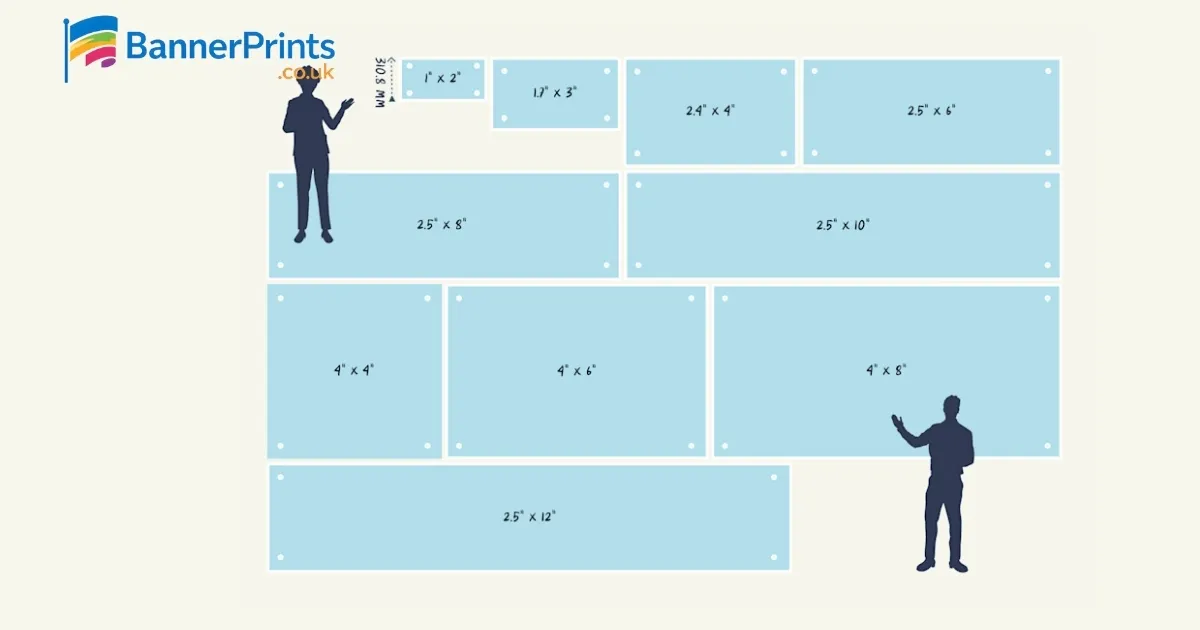
Learn how Banner Printing Buying Guide explaining GSM, banner sizes, and finishing options for indoor and outdoor use.
When companies inquire, How do I select the necessary banner in my promotion? or What GSM banner do I need outdoor use? it is quite easily comprehensible that it is confused. Banner printing is not simply choosing a design and printing press. GSM (material weight), banner size, and finishing options are the three fundamental aspects of determining the success of a banner.
This purchasing guide has been composed to respond to voice or real question that a person would ask today like, which banner is the most long lasting when placed outside. or What is it banner finish should I have on a fence or wall? At the completion of this guide, you will know clearly how to select the appropriate banner in your business requirements without necessarily being charged too much or committing expensive errors.
At Bannerprints.co.uk we assure the businesses in the United Kingdom in picking banners that would work in real conditions be it in retail advertisements, construction sites, events or exhibition.
What Is GSM in Banner Printing?
The most frequent query that we get is, what is GSM in banner printing? GSM is an acronym that means grams per square metre and it is used to mean the weight and thickness of the banner material. In simple terms, the stronger the GSM is the thicker and heavier the banner.
The reason is that lower GSM banners are light and easy to manipulate whereas the high GSM banners are strong and sturdier to apply in the long run outdoor. GSM has direct influence on the behavior of banner in wind, rain, and wear.
Which GSM Banner Should I Choose?
The other voice query that is prevalent is, what GSM banner will suit my business most? The response will be based on the location and usage of the banner. Light weight banners with a weight of about 440-450 GSM are those used in short term promotions or in indoor advertising, or in outdoor sheltered areas. They can be moved and placed easily hence their use in sales events and temporary signage.
The most versatile one is mid-weight banners that are typically 500-510 GSM. They are applied in shopfronts, railings and the majority of the outside advertising. This is the optimal compromise between cost and durability to most UK companies. Heavy Banners are used in rough environments and made of 600 GSM and above. These banners are applied on construction sites, scaffolding and any other long term outdoor displays where durability and strength are paramount.
What Is the Difference Between Vinyl and Mesh Banners?
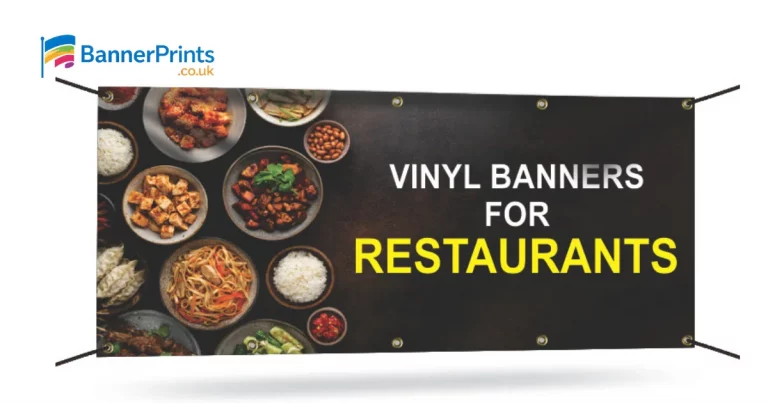
The most common question that is asked is, Is it better to use a mesh banner or a solid vinyl banner? They are both PVC which are used in differing purposes. Vinyl banners are solid and they have good print quality and bright colours. They are best where visibility and clarity of branding is of utmost significance such as when the wind is low.
Mesh banners have small holes which permit passage of air. This makes them more secure and resistant in the windy areas like scaffoldings, fences and construction sites that are open. Mesh banners ensure that there is less strain on the wind whereas the colours are a bit softer.
How Do I Choose the Right Banner Size?
The common question that people ask is what size banner should I have in my shop or event? The banner size must always be determined depending on the distance of viewing and available space. When a banner is supposed to be seen at a distance like in a road or car park, it must be bigger to enable people to read the text and images. Smaller banners are good in a home or a high-contact setting such as an exhibition area or a reception area.
The measuring of the installation area should be followed before ordering and obstacles that may exist like doors, windows, or railings, should be considered. The inability to select the correct size may decrease visibility or lead to installation problems.
Common Banner Sizes and Their Uses
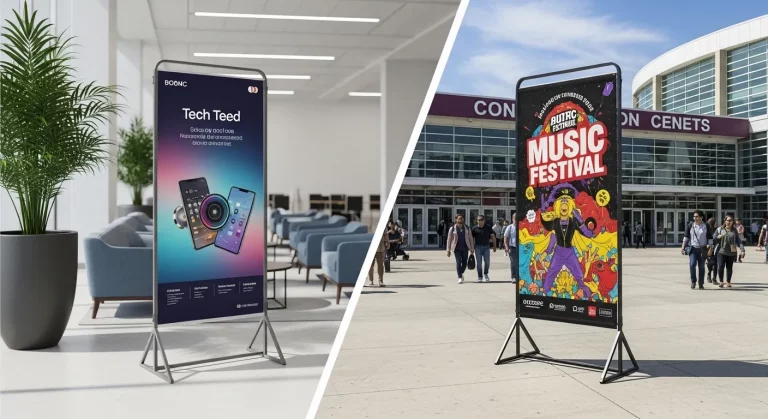
The popularity of standard banner sizes is associated with the fact that they can be used under most applications and remain affordable. Smoother sizes can be used in counters, windows and indoor promotions. Medium sizes are good when it comes to shopfronts and pop up shops. Outdoor advertising, construction branding and event signage are all good with big banners.
The fact that it uses standard sizes also makes it compatible with banner stands and fixing systems and therefore, easier to install.
What Banner Finish Should I Choose?
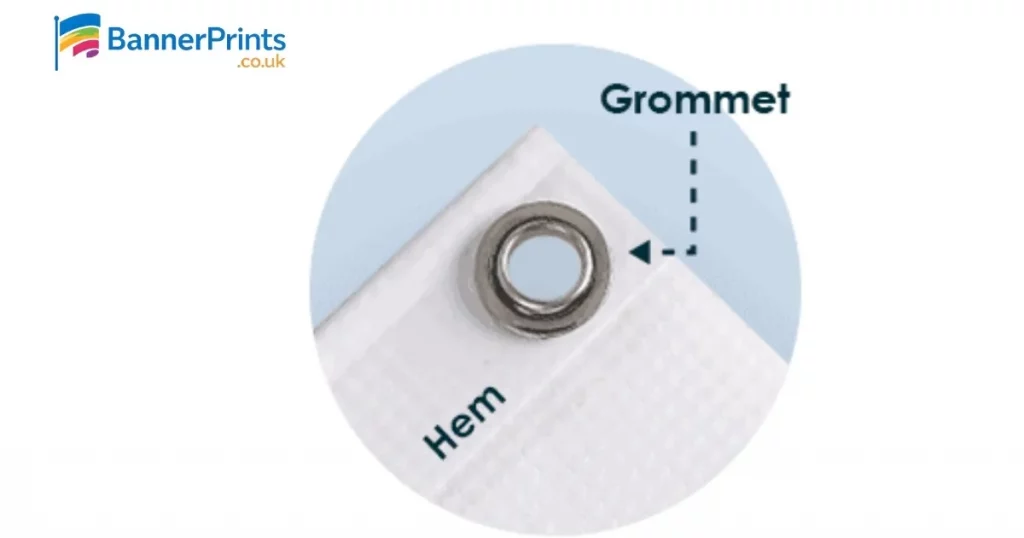
The other important voice query would be, What finishing is my banner required? Banner finishing is the way the edges are furnished and installing the banner. The most widespread finish is eyelets (alternatively, grommets). They enable tying or fixing banners on the walls, fences and railings. Reinforced hems will make the edges stronger and it will not tear apart, particularly in the outdoors.
Pole pockets are applied when the banners are supposed to slide on poles or frames. It is a typical finish on the event banners, hanging displays, and banner stands.
Do Finishing Options Affect Durability?
Yes, and this is one of the things that the buyers forget about. Even a strong material used to make a banner can be a failure in case of poor finishing. Reinforced hems spread the tension all over, and eyelets adequately spaced eliminate the stress points.
Finishing is as important as GSM in the case of outdoor banners. The proper selection of finish will also make the banner stable and presentable in the long-term.
Indoor vs Outdoor Banner Buying Considerations
The most frequent question is, “Is it possible to use the same banner both indoors and out? Although certain banners are also applicable to indoor setting, outdoor banners need additional toughness.
Banners should be placed outside and should be able to withstand sunlight, downpour and wind. Ink, heavy GSM materials, weather resistant and hardy finishing are necessary. There is more room to concentrate on the design factor and lighter materials used in indoor banners because they are not subjected to as much of an environmental stress.
How Long Should a Banner Last?
The question that people give is, How long does a vinyl banner last? Lifespan is also dependent on GSM, environment and use. Temporary posters can just take weeks, whereas permanent outdoor posters can be left to stay several months or years. The selection of the appropriate material and finish makes sure that you do not change banners sooner than it was planned.
Is Bigger Always Better in Banner Printing?
Not necessarily. The other voice query we get is, “Is it better I order the biggest banner there is? Large banners are very expensive and might not fit the area.
It aims at being seen, not just being big. A large banner and cluttered design do not always work as compared to a well sized banner and well written messages. In any case, size and readability and placement should be balanced.
How Design Works with GSM, Size, and Finish
Design should be in accord with material and size. Big banners should have minimal designs and large fonts. The smaller banners may have more information, but they need to be clear as well.
The use of high-contrast colours, less text, and powerful images has ensured the banner has good performance irrespective of GSM or finish.
Budget vs Value: Making the Right Choice
One of the things that most people worry about is, “How to stop spending money on banner printing without wasting it? The solution is in the selection of value, rather than the lowest price.
The low-cost banners which tear or fade easily will cost much more in terms of replacement. A small additional investment in the correct GSM, size and finish provides more long-term returns and brand image.
When Should You Ask for Expert Advice?
Should you be confused with material, size, or finishing, you can avoid the error with the help of professional advice. The professional printers know how banners perform in real-life situations.
We do not guess when it comes to choosing banners at Bannerprints.co.uk as we are guided by customers on the specific use cases. This makes sure that banners appear nice and work at the very beginning.
FAQs: Banner Printing Buying Guide
Final Thoughts
The art of selecting the appropriate banner is not only the design but the knowledge of GSM, size, and finish and the way they are combined. With the right questions; you can make sure that you are making a confident purchase by asking questions like; where will I use my banner, how far will people see it, and how long do I need to use it, will help you make a confident purchase.
The present banner printing buying guide is set to streamline the process and enable businesses to select banners, which present actual outcomes. Your banner is a very strong and effective marketing tool that will last long as opposed to being a temporary investment when the material you use is right in weight, size and well-finished.